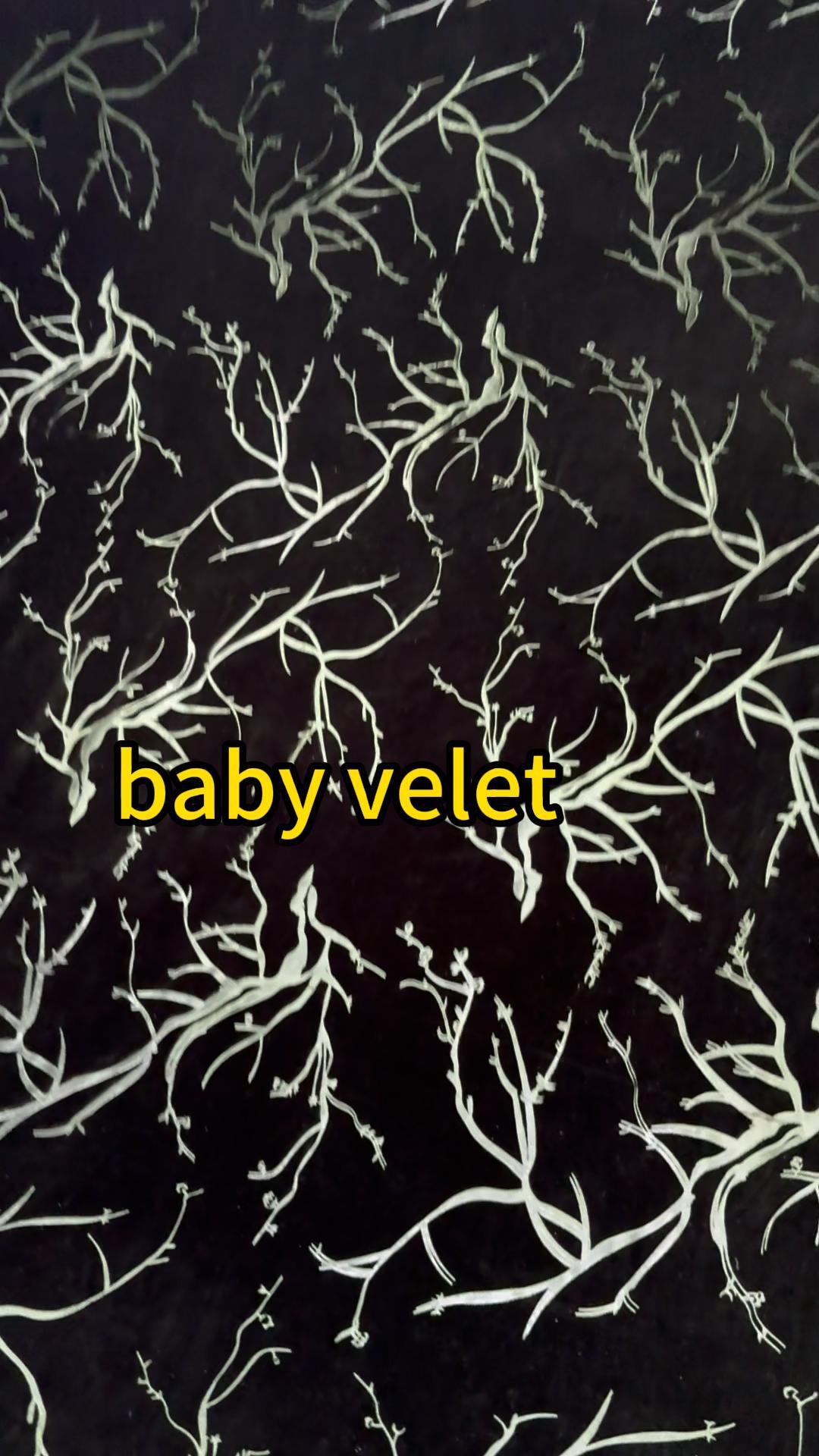
Printed baby velvet fabric combines a smooth short-pile surface with the visual flexibility of custom patterns. In our latest fabric video, we introduce a dark green baby velvet featuring a contrasting light green botanical branch design.
The close-up demonstration shows the fabric being stretched by hand, inspected under magnification, rubbed at the surface and touched from different directions. These steps give buyers an initial view of its flexibility, pile appearance, pattern clarity and handfeel before requesting a physical sample.
For sourcing teams, however, a short video is only the beginning. Composition, GSM, usable width, stretch, colorfastness, pilling, shedding and other performance requirements should be confirmed according to the intended product and agreed testing method.
Watch the Printed Baby Velvet Fabric Video
Watch the printed baby velvet fabric video on YouTube
The video is designed to show the visible surface and movement of the fabric. Exact shade, handfeel and performance should still be evaluated with an approved sample under the buyer’s intended production and use conditions.
What Is Baby Velvet Fabric?
Baby velvet is a short-pile fabric valued for its smooth appearance, soft touch and clean surface. Depending on the selected construction and finishing route, it can be developed in different weights, widths, colors, patterns and stretch levels.
The term “baby velvet” may be used differently across markets, so buyers should not rely on the product name alone. A complete specification should identify the composition, construction, GSM, usable width, pile characteristics, stretch direction, backing and required finishing.
For printed qualities, the pattern scale, repeat, direction and color standard are also important. These details influence cutting layouts, sewing plans, product appearance and material consumption.
What Does the Video Show?
1. Manual Stretch Demonstration
The fabric is gently pulled by hand to show how it moves and responds under light tension. This provides a quick visual reference for flexibility, but it does not provide a quantified stretch or recovery result.
If stretch performance is important for a garment, fitted cover or other constructed product, buyers should confirm:
- Stretch direction
- Stretch percentage
- Recovery after extension
- Dimensional stability
- Behavior after washing or finishing
- Compatibility with the intended cutting and sewing method
2. Smooth, Even Pile Surface
A magnified section of the video highlights the short pile. Buyers can use this view to make an initial assessment of surface uniformity, pile direction and the way the fabric reflects light.
Velvet often appears lighter or darker when the pile is brushed in different directions. For this reason, pile direction should be defined before cutting, especially when several panels must have a consistent appearance in the finished product.
3. Manual Surface-Rubbing Check
The video includes a simple hand-rubbing demonstration. This can help viewers observe whether loose fibers or visible surface changes appear during basic handling.
It should not be interpreted as a standardized pilling, abrasion or shedding test. When these properties are critical, buyers should provide the required testing method, acceptance level and end-use conditions before bulk production.
4. Soft and Smooth Handfeel
The final close-up focuses on touch and surface movement. The short pile creates a smooth visual effect and a soft handfeel that may suit selected apparel, home textile and accessory projects.
Because softness cannot be judged accurately through a screen, a physical swatch should be reviewed before confirming a production order.
Botanical Pattern and Color Direction
The fabric shown in the video uses a dark green ground with a lighter green branch pattern. The contrast creates a botanical look without relying on a highly multicolored print.
This type of design may be considered for collections that need:
- Nature-inspired visual direction
- Deep seasonal colors
- A clean short-pile surface
- A pattern that remains visible at close and medium viewing distances
- Coordinated apparel, cushion or accessory products
For a custom print, buyers should share the original artwork or a clear reference, target colors, repeat size, print direction and expected application. Pantone references or approved physical standards can support more accurate color communication.
Possible Applications for Printed Baby Velvet
The final application depends on the confirmed fabric specification rather than appearance alone. Subject to sampling and performance review, printed baby velvet may be considered for the following categories.
Garments
Potential garment applications include jackets, fashion panels, costume pieces, loungewear and decorative trims. Buyers developing apparel should confirm drape, stretch, recovery, sewing behavior, colorfastness and care requirements.
Explore additional options in our garment fabric catalogue.
Home Textiles
The smooth pile and botanical pattern may also be explored for cushions, decorative pillow covers, throws and selected interior textile products. The required GSM, backing, seam strength and care method should match the final product construction.
Browse our home textile fabric catalogue for more surface and application references.
Bags and Soft Accessories
Printed velvet can add a tactile surface to bags, decorative panels, slippers, trims and other soft accessories. Depending on the construction, a backing or bonding layer may be needed to improve stability.
View more options in our accessory fabric catalogue.
These application examples are starting points. Buyers should test the selected fabric in the real cutting, sewing, bonding, washing and use environment before approving bulk production.
What Can Be Customized?
Bluehole Textile supports custom plush and printed fabric development for international B2B buyers. Depending on the selected construction, production route and order requirements, the following items can be discussed:
- Ground color and pattern colors
- Print artwork and repeat size
- Pattern direction
- Fabric composition
- Target GSM
- Usable width
- Pile height and density
- Stretch and recovery targets
- Backing or bonding
- Surface finishing
- Packing and roll requirements
Not every combination is suitable for every base fabric. Sample development helps determine whether the requested design, construction and performance targets can be achieved together.
What Should Buyers Check Before Ordering?
A visual review can help narrow down a fabric direction, but a sourcing decision should be based on a complete technical and commercial brief.
Appearance and Pattern
Confirm the ground color, print colors, pattern scale, repeat, direction and acceptable color tolerance. Review the fabric under lighting conditions relevant to the finished product.
Construction and Dimensions
Confirm composition, knitting or weaving structure, GSM, usable width, pile height and roll length. If the fabric stretches, identify the direction and required range.
Surface Performance
Specify any required pilling, abrasion, shedding, snagging or pile-retention standards. A manual rubbing demonstration is helpful for presentation, but it cannot replace an agreed laboratory method.
Color and Care Performance
Depending on the product and market, testing may include colorfastness to rubbing, washing, light or perspiration. Buyers should also confirm shrinkage, dimensional stability and the proposed care instructions.
Cutting and Sewing
Evaluate pile direction, pattern alignment, seam appearance and possible edge curling. A trial product can reveal issues that are not visible in a flat swatch.
Compliance Requirements
Share the destination market, product category and required test standards at the inquiry stage. Requirements may differ for apparel, home textiles, children’s products and accessories.
Why Is a Physical Sample Important?
Video helps buyers see movement, texture and pattern more clearly than a still photograph. It cannot fully communicate:
- Actual handfeel
- Exact shade under different lighting
- Pile density and height
- Stretch and recovery
- Fabric weight
- Backing stability
- Print sharpness at full scale
- Cutting and sewing behavior
- Performance after washing or finishing
For a new project, we recommend reviewing a physical swatch and, where practical, producing a prototype with the intended construction method. The approved sample can then serve as a reference for bulk production.
Information to Include in Your Inquiry
To receive more relevant sample suggestions and a clearer quotation, provide:
- Finished-product application
- Preferred fabric type or reference swatch
- Target composition
- Target GSM and usable width
- Stretch requirements
- Color or Pantone reference
- Print artwork and repeat size
- Backing or finishing requirements
- Estimated order quantity
- Destination country
- Testing and compliance requirements
- Target delivery schedule
If you do not yet have a complete technical specification, send a product photo, reference fabric or finished sample. Our team can use it to discuss suitable development directions.
Custom Printed Velvet Support from Bluehole Textile
Bluehole Textile works with global B2B buyers on plush, fleece, faux fur, minky and printed fabric programs. Our integrated production support covers fabric selection, custom development, sampling, production coordination, inspection, packing and export assistance.
For printed baby velvet projects, we can help buyers compare the visual target with practical requirements such as GSM, width, pile, stretch, backing, testing and order quantity.
The objective is not simply to reproduce a pattern. The base fabric, print route and finishing plan should work together for the intended finished product.
Frequently Asked Questions
Is the Fabric in the Video Laboratory Tested?
The video shows manual demonstrations of stretch, pile appearance, surface rubbing and handfeel. These are useful visual references but are not substitutes for standardized laboratory tests. Please provide the required test method and acceptance criteria for your project.
Can the Botanical Pattern Be Customized?
Custom print artwork, colors, repeat size and pattern direction can be discussed for suitable fabric programs. Final feasibility depends on the base fabric, print method, quantity and required result.
Can I Order a Different Color?
Custom colors may be developed according to a Pantone reference, physical swatch or approved color standard. Sampling or lab-dip confirmation should be completed before bulk production.
Which Specifications Are Needed for a Quotation?
Please share the application, target composition, GSM, width, stretch, color or pattern, backing or finishing requirements, quantity and destination. Include testing, packing and delivery requirements when available.
Can I Request a Sample Before Bulk Production?
Yes. Available swatches, color references, printed samples or custom developments can be discussed according to the project stage. A physical sample is recommended before production approval.
Request Printed Baby Velvet Samples and Pricing
This botanical-pattern baby velvet offers a distinctive dark green color direction, a smooth short-pile surface and a soft visual character. The right specification will depend on how the fabric will be cut, sewn, finished and used.
If you are developing garments, cushions, bags or other soft textile products, contact Bluehole Textile with your application, target GSM, width, color, pattern, quantity, destination and testing requirements.
Our team can recommend suitable fabric options, arrange samples and prepare a quotation for your custom printed velvet project.