The fabric raising process, also called fabric napping, is a surface-finishing operation that lifts fibers from a knitted or woven base to create a softer, fuller or more textured face. The production route must be adjusted to the fabric construction, pile target, handfeel and intended application.
In this factory video, yellow fabric moves continuously through a multi-roller raising machine at Bluehole Textile in Lijia, Changzhou, Jiangsu, China. After processing, the surface is handled and checked at close range before the material is collected for the next production stage.
The video shows a real raising operation, but it does not display a confirmed product name, composition, GSM, usable width or machine setting. Buyers should therefore use the footage as a process reference—not as the technical specification for every raised plush or fleece fabric.
Quick Answer: What Does Fabric Raising Do?
Fabric raising uses rotating rollers fitted with fine wire clothing to work the fabric face and lift selected fibers from the surface. Depending on the base fabric and settings, the process can develop a soft nap, increase visible fullness, adjust surface coverage and create the required pile character.
The desired result is not simply “the fluffier, the better.” Excessive or unsuitable processing may affect appearance, loose fiber, surface strength or repeatability. The production team must balance softness and loft with the requirements of cutting, sewing, use and care.
Watch the Fabric Raising Process
Watch the fabric raising process on YouTube Shorts
What Happens During the Raising Process?
Although the exact production route changes by fabric, the video highlights four useful stages for B2B sourcing teams.
1. The Fabric Enters the Raising Machine
The yellow fabric is guided into the machine under controlled movement. Feeding and tension must suit the fabric because the surface needs to contact the working rollers consistently without unnecessary distortion.
A lightweight short-pile fabric may require a different setting from a heavier fleece or a fuller plush construction. Stretch fabrics also need suitable tension management so that the base is not unintentionally extended during processing.
2. Multiple Rollers Work on the Surface
Inside a typical raising machine, multiple wire-covered rollers work against the fabric surface as the main drum rotates. Roller direction, relative speed, fabric tension and the number of passes can all influence the final nap.
The goal may be a fine and even short nap, a fuller fleece-like surface or another approved texture. Machine settings should be confirmed through trial production rather than copied automatically from a different construction.
3. The Raised Surface Is Checked by Hand
The close-up portion of the video shows the finished surface being touched, folded and lightly stretched. This helps demonstrate visible nap, softness, drape and how the surface changes when handled.
Hand evaluation is useful, but it should be combined with measurable specifications. A sourcing team may also need to verify GSM, usable width, stretch, recovery, pile direction, shade, surface consistency and backing condition.
4. The Fabric Moves to the Next Stage
The processed fabric is shown in bulk after raising. Depending on the order, the next stage may include brushing, softening, inspection, rolling, packing or another required finish.
For a wider view of connected production stages, visit our guide to the Bluehole Textile plush fabric factory.
Raising, Brushing and Softening: What Is the Difference?
These terms are related, but they do not describe exactly the same operation.
| Process | Primary purpose | What buyers should confirm |
|---|---|---|
| Raising or napping | Lifts fibers to develop a nap or fuller surface | Nap height, fullness, uniformity and loose fiber |
| Brushing | Refines, separates or aligns the raised surface | Pile direction, surface cleanliness and visual effect |
| Softening | Adjusts the handfeel through an appropriate finishing route | Target touch, application, care and compliance requirements |
| Curling or texturing | Creates a curled or dimensional pile on suitable fabrics | Curl size, definition, loft and approved reference |
| Embossing | Produces a raised or pressed surface pattern | Pattern scale, direction and repeat consistency |
One fabric program may use more than one of these processes. Another may not require raising at all. Buyers interested in more dimensional surfaces can also review our plush fabric curling and finishing guide.
Why Is Raising Important for Plush and Fleece Fabrics?
Raising can contribute to how a finished fabric looks, feels and performs in its intended product. Its importance should be evaluated together with the yarn, knitted structure, pile and finishing route.
Surface Softness and Handfeel
Lifting fibers creates a surface that can feel softer and warmer to the touch. The target may range from a fine, compact nap to a fuller and more noticeable fleece effect.
Pile Appearance and Coverage
The process can influence how dense, even or directional the face appears. Buyers should review the fabric under consistent lighting and brush it in different directions before approving the surface.
Loft and Visual Fullness
A more raised surface may appear fuller or more substantial. However, visible volume should still suit the final design, drape, packing method and target cost.
Cutting and Sewing Behavior
Pile direction, stretch and surface friction may influence spreading, cutting and sewing. A finished-product prototype gives better evidence than a loose swatch when the fabric will be used around curves, seams, filling or bonded components.
Which Fabric Programs May Use Raised or Brushed Surfaces?
Raised and brushed finishes may be discussed across several plush and fleece families, but the correct process depends on the selected construction.
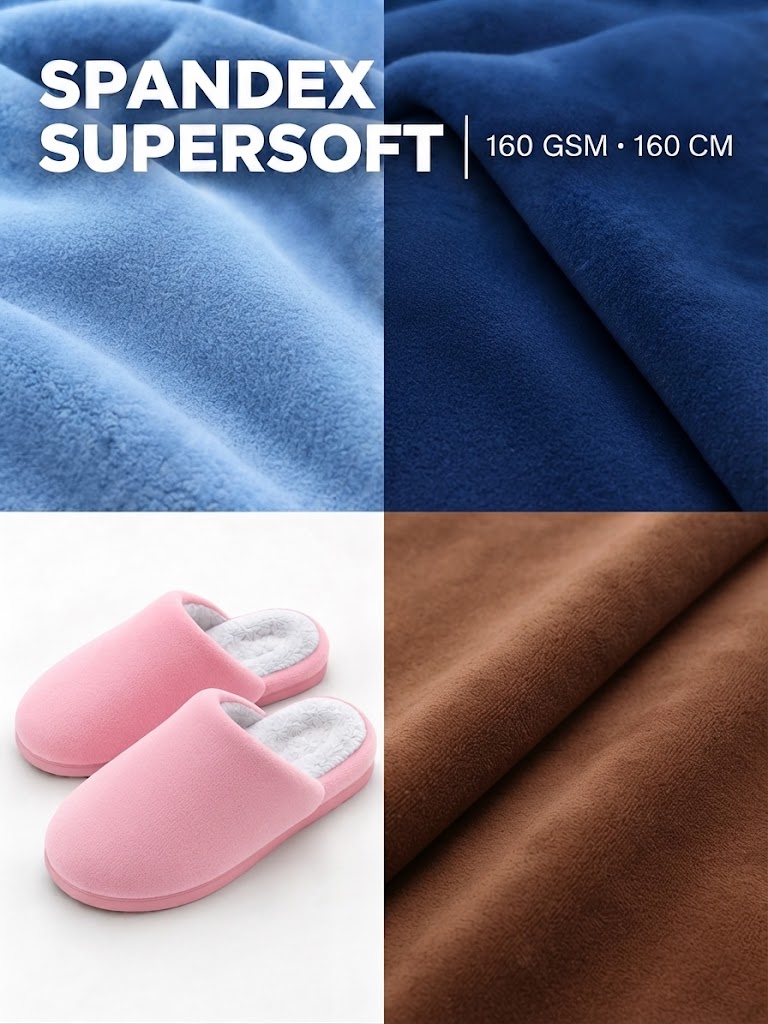
Spandex Super Soft Plush
Spandex super soft plush fabric combines a compact soft surface with useful stretch and recovery. Buyers should confirm whether the required handfeel comes from the base construction, surface finishing or a combination of both. Stretch direction and recovery should also be tested after finishing.
For projects comparing similar short-pile materials, see our guide to Spandex Supersoft vs Crystal Supersoft.
Faux Rabbit Fur and Fuller Plush Surfaces
Faux rabbit fur fabric generally uses a denser, fuller pile than short-nap super soft fabric. Its surface may involve additional brushing, softening, texturing or pile adjustment depending on the target appearance.
Fleece and Brushed Knitted Fabrics
Polar fleece, anti-pill fleece, flannel fleece and other knitted structures may use raising or brushing to develop the intended face or reverse-side nap. The correct program should be based on the application, GSM, usable width, warmth target, stretch and care requirements.
PV Plush and Textured Fabrics
PV plush and other suitable pile fabrics may be developed with smooth, raised, curled or textured effects. Fabric construction and finishing must be selected together because the same treatment will not create an identical result on every base quality.
Explore Fabric Options by Finished Application
Choosing the fabric by its end use makes internal sourcing discussions more practical than choosing by softness alone.
- Blankets, throws, cushions and bedding: Browse the home textile fabric catalogue, including rabbit fur plush, Korean velvet, embossed textures and long-pile options.
- Stuffed toys and character products: Explore the plush toy fabric catalogue, including super soft plush, velboa, teddy sherpa and long-pile fabrics.
- Hoodies, jackets, pajamas and linings: Review the garment fabric catalogue for fleece, velvet, faux fur and other soft-touch constructions.
- Bags, trims, slippers and special projects: Visit the accessory fabric catalogue for rabbit fur plush, faux mink, PV plush and textured options.
The category pages provide starting directions. Final suitability should be confirmed with the chosen sample, technical specification and intended manufacturing process.
What Should Buyers Confirm Before Bulk Production?
A clear brief helps the factory choose a practical base construction and raising route. Include the following information when requesting samples or pricing:
- Finished-product application and target market.
- Preferred fabric family or an existing physical reference.
- Target composition, when it is fixed.
- Required GSM and usable width.
- Stretch direction and recovery, when relevant.
- Target nap or pile, including height, density, direction and fullness.
- Required handfeel, supported by a reference sample when possible.
- Color standard, such as a Pantone reference, lab dip or physical swatch.
- Estimated sample and bulk quantity.
- Destination country or port.
- Testing, labeling and packing requirements.
- Required sampling and delivery schedule.
Commercial descriptions such as “soft fleece” or “brushed plush” are not complete specifications. A numbered sample, written parameters and approved physical reference give both parties a clearer production standard.
How Should a Raised Fabric Sample Be Evaluated?
Review the sample in conditions that represent the finished product as closely as possible.
- Brush the surface in different directions and check the pile response.
- Compare nap height, fullness and consistency across the width.
- Inspect the backing, selvedges and any visible distortion.
- Measure GSM and usable width against the agreed tolerance.
- Check stretch and recovery in both fabric directions when required.
- Observe loose fiber, pilling tendency and surface change after handling.
- Compare color under agreed lighting conditions.
- Make a trial product using the intended cutting, sewing, filling, washing or bonding process.
For a new program, approve the finished sample before bulk production and retain it as a reference for inspection and repeat orders.
Custom Fabric Raising and Finishing at Bluehole Textile
Bluehole Textile supports international B2B buyers with factory-backed plush and fleece fabric development, sampling, custom production and export coordination.
Depending on the selected construction and order plan, buyers can discuss:
- Stock and custom color development
- Custom GSM and usable width
- Pile height, density and surface direction
- Raising, brushing and softening
- Printing, embossing, bonding and textured effects
- OEM and ODM fabric programs
- Sample dispatch and production references
- Roll packing, labels, shipping marks and export preparation
Availability, MOQ, sampling time, lead time and pricing depend on the actual fabric specification and current production plan. These details should be confirmed in the project quotation.
Frequently Asked Questions
What is the fabric raising process?
Fabric raising, also called napping, is a finishing process that uses rotating wire-covered rollers to lift fibers from the fabric surface. It can create a softer, fuller or more textured face depending on the construction and machine settings.
Are raising and brushing the same process?
Not exactly. Raising develops the nap by lifting fibers, while brushing is generally used to refine, separate or align the surface. A production route may use both processes when appropriate.
Can every plush or fleece fabric be raised?
No. Suitability depends on the yarn, knitted structure, pile, weight, stretch and intended result. The process should be tested on the selected base fabric before bulk production.
Is the yellow fabric in the video a specific product?
The video shows a yellow fabric undergoing raising and a close-up of its finished surface, but it does not display a confirmed product name or technical specification. Its exact composition, GSM, width and commercial quality should not be inferred from the footage alone.
Can the nap, color, GSM and width be customized?
These specifications can be discussed for suitable OEM and ODM programs. Final availability depends on the base construction, required finish, quantity and production feasibility.
Can I request a sample before ordering?
Yes. Available swatches, color cards, lab dips and custom surface references can be arranged depending on the fabric and project stage. A physical sample and finished-product trial are recommended before a new bulk program is approved.
What information is needed for a quotation?
Provide the application, fabric type or reference, target GSM, usable width, stretch, nap or pile requirement, color, finishing direction, estimated quantity, destination and any testing or packing requirements.
Request Raised Plush or Fleece Fabric Samples
The fabric raising process can help develop a soft and fuller surface, but the best result comes from matching the base construction, machine settings and finishing route to the finished product.
If you are developing blankets, cushions, plush toys, garments, accessories or another soft textile product, share your fabric requirements with Bluehole Textile. Our team can review suitable options, arrange samples and prepare a project-specific quotation.
Please include: application, preferred fabric, GSM, usable width, nap or pile, color, quantity and destination.
Contact Bluehole Textile to request samples or a production quote