What happens inside a plush fabric factory before a finished roll is ready for dyeing, finishing or sampling? This short factory-floor video takes you inside Bluehole Textile’s warp-knitting workshop in Lijia Town, Changzhou, Jiangsu, China.
The footage shows rows of production equipment in operation, knitted fabric moving through the machines, finished fabric being rolled and operators monitoring yarns and equipment. It is a brief but practical look at the production stage behind custom plush and fleece fabric programs.
Watch the Plush Fabric Factory Video
If the embedded player does not load, watch the factory video on YouTube Shorts.
What Does the Video Show?
The video focuses on the warp-knitting production floor rather than a staged showroom. Buyers can see several parts of day-to-day factory operation:
- Rows of warp-knitting equipment running on the production floor
- Yarn feeding into the machines during fabric formation
- Knitted fabric moving through the equipment and being rolled
- Operators checking yarns, machine operation and production conditions
- The scale and layout of a working textile workshop
The video does not identify one specific fabric construction, composition, GSM or width. Those details vary by project and should be confirmed during sample development.
For a closer explanation of the equipment and control points, visit our plush fabric weaving and warp-knitting capability page.
Why Is Warp Knitting Important for Plush Fabric?
Warp knitting creates the base construction that supports many plush and fleece fabric styles. Control at this stage can influence fabric stability, density, stretch behavior, surface appearance and performance during later dyeing and finishing.
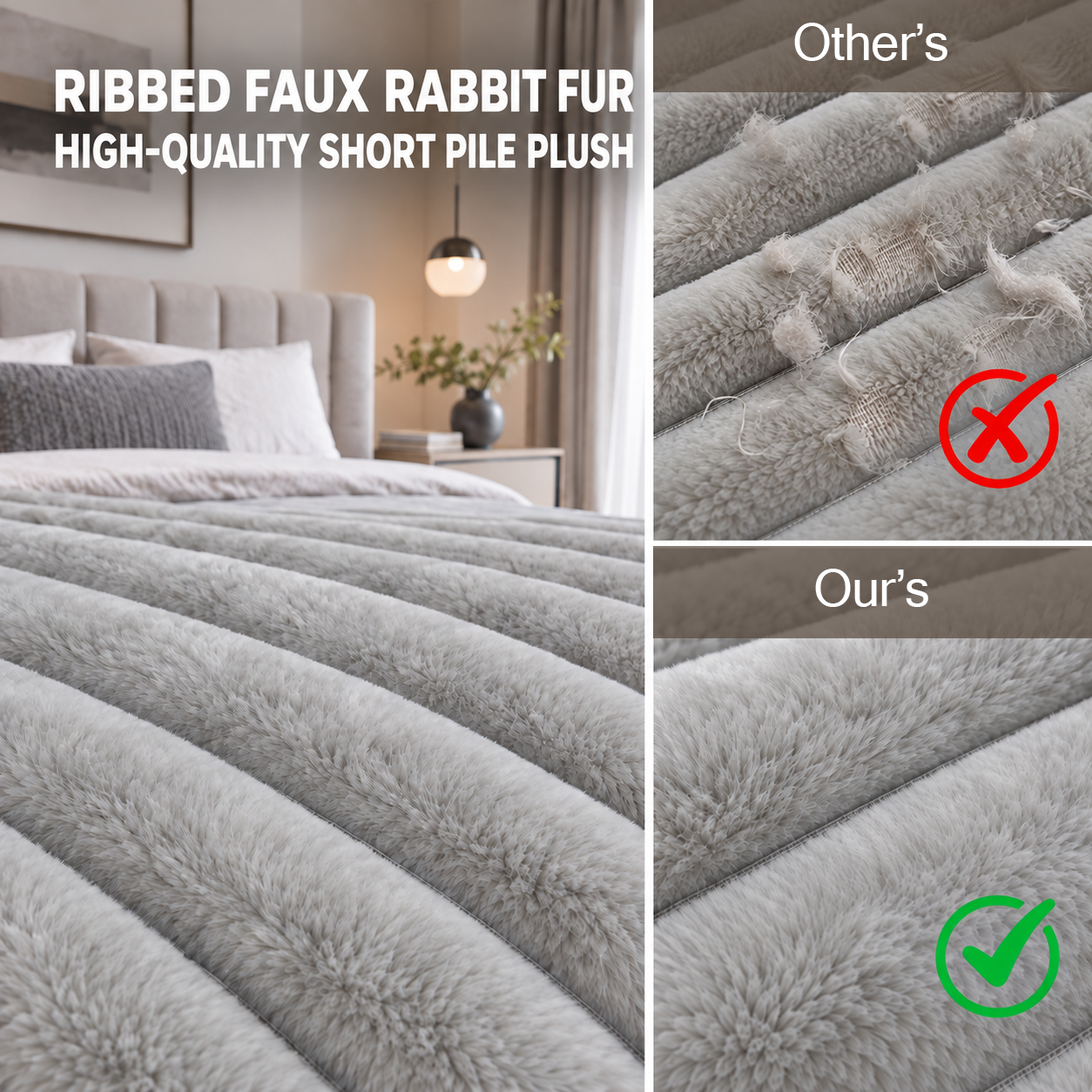
Bluehole Textile’s workshop uses double-needle-bed warp-knitting machines and single-needle multi-bar warp-knitting machines for different plush structures. Depending on the yarn, machine setup and finishing route, the process can support rabbit-fur-like plush, fleece, flannel, PV plush and other textured fabrics.
During production, the team monitors factors such as:
- Yarn arrangement and tension — helping maintain a stable fabric construction.
- Machine operation — identifying production abnormalities as early as possible.
- Fabric density and surface condition — checking whether the fabric is following the approved production direction.
- Rolling and batch identification — keeping the output organized for the next manufacturing stage.
These controls do not replace final inspection. They create an earlier checkpoint before dyeing, brushing, embossing, printing, bonding or other surface treatments.
Which Plush Fabric Projects Can Start from This Production Process?
Different finished products require different pile heights, weights, widths, stretch levels, backing options and surface finishes. Buyers can explore the following product categories when planning a new program:
Home Textile Fabrics
Our home textile fabric collection includes rabbit-fur-style plush, Korean velvet, embossed textures, corduroy plush and long-pile options for blankets, cushions, bedding and decorative products.
Plush Toy Fabrics
The plush toy fabric collection covers rabbit-fur-style plush, printed super-soft plush, velboa, teddy sherpa, embossed textures and long-pile fabrics for stuffed-toy development.
Garment Fabrics
Our garment fabric collection includes flannel fleece, faux rabbit fur, teddy sherpa, Korean velvet, corduroy and other soft fabrics for jackets, hoodies, robes and fashion applications.
Accessory Fabrics
The accessory fabric collection offers plush and faux-fur directions for bags, trims, slippers, linings, decorative accessories and selected industrial applications.
What Should B2B Buyers Provide Before Requesting Samples?
Clear project information helps a fabric manufacturer recommend more relevant constructions and sample options.
| Information to provide | Why it matters |
|---|---|
| Finished-product application | Helps identify a suitable fabric category and surface direction |
| Fabric type or reference swatch | Gives the factory a clearer construction and hand-feel target |
| Composition requirement | Supports yarn and production-route selection |
| Target GSM and usable width | Affects construction, consumption and quotation |
| Pile height and surface finish | Defines the visual and tactile result |
| Color or artwork | Supports color matching, printing or pattern development |
| Estimated order quantity | Helps evaluate sampling and bulk-production options |
| Destination country | Supports packing, documentation and shipping planning |
You can send these details through the Bluehole Textile contact and sample request page.
From Factory Video to a Custom Fabric Project
A production-floor video can help buyers understand where a fabric is made, but it should be followed by specification confirmation and physical sampling. A typical sourcing conversation may include:
- Sharing the finished-product application and reference fabric
- Confirming construction, composition, GSM, width, pile and finish
- Reviewing available swatches, color cards or a custom sample
- Confirming quotation, quantity, packing and delivery requirements
- Approving the production reference before bulk manufacturing
This approach gives the buyer and factory a shared technical reference instead of relying only on photographs or general product names.
Quick Answers for Fabric Buyers
Where is the Bluehole Textile factory located?
The factory shown in the video is located in Lijia Town, Wujin District, Changzhou, Jiangsu, China.
What production process is shown in the video?
The video mainly shows warp-knitting equipment, fabric formation, fabric rolling and operator monitoring inside the workshop.
Does Bluehole Textile support custom plush fabric?
Yes. Custom options can include fabric construction, color, GSM, usable width, pile height, pattern, backing, bonding and surface finishing, depending on the project.
Can buyers request samples before a bulk order?
Yes. Available swatches, color cards, lab dips and custom surface references can be discussed according to the fabric and project stage.
What products can plush and fleece fabrics be used for?
Applications include blankets, cushions, throws, plush toys, baby products, hoodies, jackets, robes, slippers, bags, trims and other soft textile products.
Discuss Your Custom Plush Fabric Requirements
Bluehole Textile supports international B2B buyers with fabric selection, sample development, custom specifications, bulk-production coordination and export documentation.
To receive more relevant sample suggestions or a quotation, share your application, fabric type, target GSM, usable width, color, quantity and destination through our fabric inquiry form.